
Table Of Contents
Manufacturing marketing is going through a real shift right now. AI is changing how buyers research solutions, traditional search is rewarding deeper technical expertise, and in-person events are picking up again as teams look for more hands-on conversations. At the same time, buyers are approaching the evaluation process with higher expectations and a lot more curiosity. They want to see how things work, understand the risks, and get a feel for the people behind the product.
Staying visible isn’t enough anymore. Manufacturers that rise above the noise will be the ones who adapt quickly and give prospects a more transparent look into their solutions.
In other words, when you pair technical credibility with modern discovery channels and richer product experiences, you create an advantage that shows up long before the first sales call.
-Dec-15-2025-09-01-21-1014-PM.png?width=1920&height=1005&name=HubSpot%20Content%20Hub%20for%20Marketers%20(2)-Dec-15-2025-09-01-21-1014-PM.png)
What Makes B2B Manufacturing Marketing Different?
Marketing in manufacturing involves helping highly technical buyers make decisions that impact production lines, safety standards, operational efficiency, and long-term reliability. These decisions often involve high stakes, which means buyers take their time, conduct detailed evaluations, and gather input from multiple stakeholders.
As digital behavior evolves and AI becomes part of everyday research, the expectations placed on manufacturers are rising fast. Buyers now want clarity, transparency, and depth. They expect marketing to answer technical questions, reduce risk, and help them envision exactly how a solution will work inside their environment. The more complicated the product, the more important it is for marketers to bridge the gap between engineering expertise and buyers who need to understand the real-world impact.
Here are some of the factors that make manufacturing marketing uniquely challenging yet full of opportunity.
Longer, Multi-Stakeholder Buying Cycles
Manufacturing purchases can influence entire workflows or production lines, so decisions rarely happen quickly. Multiple teams weigh in—engineers evaluate technical specifications, operators consider usability, procurement reviews cost and risk, and executives look at long-term value. Each group brings its own priorities, questions, and criteria.
This process creates a buying cycle with more steps, more approvals, and far more scrutiny than most industries experience. Marketers who understand these internal dynamics are better equipped to support every stage of the journey with content that speaks to each stakeholder’s needs.
Complex, Technical Products
Manufacturers sell products, systems, machinery, components, and solutions with operational impact. Buyers must validate performance, compatibility, maintenance requirements, integration considerations, and safety implications, all at the same time.
That’s why generic marketing messages fall flat; they don’t help technical audiences evaluate what actually matters. Detailed, accurate, and application-focused content, on the other hand, makes it easier for buyers to make a decision.
Limited Marketing Resources
Many manufacturing companies run lean marketing teams that juggle brand development, sales support, content creation, trade shows, and product launches all at once. Without the luxury of large teams or budgets, manufacturers need marketing strategies that create outsized impact. It makes repurposable content, automation, and high-value technical assets critical.
When marketing efforts focus on depth rather than volume, even small teams can outperform larger competitors.
Greater Demand for Trust & Proof
In manufacturing, risk avoidance is a major driver. Buyers want evidence, not hype. They need to see reliability data, testing results, certifications, quality processes, and real-world application examples before they feel confident in a decision.
As AI blends information from across the web, strong trust signals have become even more important. When your brand consistently showcases expertise and operational credibility, buyers notice—and algorithms do too.
-Dec-15-2025-09-01-21-0249-PM.png?width=1920&height=1005&name=HubSpot%20Content%20Hub%20for%20Marketers%20(3)-Dec-15-2025-09-01-21-0249-PM.png)
B2B Manufacturing Marketing Tips: 15 New, Innovative Strategies
Marketing in manufacturing has always been shaped by technical depth and long buying cycles, but the industry is changing fast. Buyers are researching across more channels, AI is influencing how information is discovered and interpreted, and expectations around transparency and expertise have never been higher.
To stand out in 2026, manufacturers must create experiences that educate and accelerate decision-making for every stakeholder involved.
The following strategies move beyond traditional tactics to help you create the kind of market presence that attracts high value buyers and keeps them engaged throughout the entire journey.
Tip #1: Build Digital Twins of Your Products for Marketing
Digital twins allow prospects to explore your product in a way traditional documentation never could. When buyers can virtually test different configurations, study performance under various conditions, or examine compatibility questions on their own terms, they gain a clearer picture of how your solution fits their environment. It reduces ambiguity early in the process and gives engineering teams a level of access they typically wouldn't see until well into evaluation.
The impact extends beyond convenience. A digital twin transforms marketing from a passive information source into an active discovery tool. It shortens back and forth conversations, helps buyers feel more confident in their understanding, and positions your company as an innovator that prioritizes transparency. In an industry where trust and technical credibility carry significant weight, this shift can make a meaningful difference.
Tip #2: Use Predictive Signals to Prioritize Accounts
Manufacturers have access to an abundance of operational clues that signal when a company may be preparing for an upgrade or investment. AI helps turn those clues into actionable insights by analyzing patterns across equipment age, compliance changes, facility expansions, or shifts in capacity demand.
By connecting these signals to targeted outreach, you reach buyers before their evaluation process fully begins. This approach creates space for more meaningful conversations, positions your team as a proactive partner, and reduces the noise created by competitors who enter the conversation later. It changes your go-to market motion from reactive to strategic.
Tip #3: Launch a Customer Engineering Community or Forum
Technical buyers value input from people who understand their day-to-day challenges. Creating a dedicated engineering community gives them a space to ask questions, troubleshoot, share ideas, and learn from peers who use similar equipment. It becomes an extension of your brand—part knowledge hub, part support network, part innovation engine.
These communities often reveal insights you wouldn’t uncover through traditional research methods. You learn where customers struggle, what they wish they had, what content would help them work more effectively, and which use cases matter most.
Over time, you’ll create an ecosystem of shared expertise that boosts loyalty and drives continuous engagement.
Tip #4: Engineer Deep Buyer Understanding Through Operational Insight
Understanding your buyer means understanding their environment. Many manufacturers rely on generalized personas that gloss over the realities of daily operations. A deeper approach involves spending time on the factory floor, observing workflows, and listening to the subtle challenges engineers and operators face throughout their shifts. These conversations highlight friction points that documentation alone can’t reveal.
When marketing reflects real operational pain points, your messaging becomes far more relevant. Prospects recognize themselves in your content, trust your experience, and engage more deeply because you’re addressing issues that shape their performance metrics. It creates a connection that goes beyond features and aligns you with their goals.
-Dec-15-2025-09-01-28-2201-PM.png?width=1920&height=1005&name=HubSpot%20Content%20Hub%20for%20Marketers%20(4)-Dec-15-2025-09-01-28-2201-PM.png)
Tip #5: Segment Buyers by Technical Complexity
You may already be segmenting your email lists by industry or company size, but these factors don’t fully capture the requirements that drive manufacturing decisions.
Technical complexity offers a more accurate segmentation model because it reflects the constraints and conditions that influence purchasing. Companies with high customization needs, tight engineering tolerances, or intensive compliance requirements evaluate solutions differently than those with simpler workflows.
By grouping buyers according to complexity, you tailor messaging to challenges that feel specific rather than generic. You create more precise positioning, sharper content relevance, and a smoother buying experience because each segment feels understood. It also helps your sales team prioritize opportunities based on fit and readiness.
Tip #6: Build a Durable Brand with Trust Signals
In manufacturing, the most powerful differentiator is confidence. Buyers want proof that your product performs reliably under the conditions that matter most.
A durable brand is built through transparency about processes, certifications, test data, and real world outcomes. These details reassure technical audiences and help them justify decisions to their internal stakeholders.
As AI continues to pull information from across the web, strong trust signals reinforce your authority in algorithmic environments as well. They help your content rank more effectively, appear in AI generated summaries, show up in LLM responses, and stand out in a search landscape where credibility determines visibility.
A strong reputation built on proof is one of the few advantages that compounds over time.
Tip #7: Combine In-Person Selling With a Strong Digital Presence
Trade shows and plant visits aren’t going anywhere, and they still play an important role in manufacturing, but they are now just one part of a longer digital journey. Buyers often return home from in-person conversations and continue researching online, seeking content that validates what they heard or clarifies technical details. In other words, your digital presence must work in tandem with your field efforts.
A hybrid selling model creates continuity. After an event, buyers can revisit demos, watch technical videos, download guides, and continue conversations asynchronously. It keeps your brand top of mind throughout the long evaluation period and supports stakeholders who weren’t present at the event but still influence the decision.
Tip #8: Publish High-Impact Technical Content Buyers Actually Use
Manufacturing buyers rely on content that helps them solve real problems. They want application notes that explain specific processes, technical videos that remove ambiguity, and explanations that help them compare solutions with technical accuracy. When your content becomes a tool rather than an advertisement, buyers return to it repeatedly during evaluation.
Practical content positions your company as an extension of their engineering team. It builds familiarity and credibility, reducing uncertainty and accelerating internal alignment.
When the material you provide is useful and valuable to technical buyers, your brand becomes part of their problem-solving workflow.
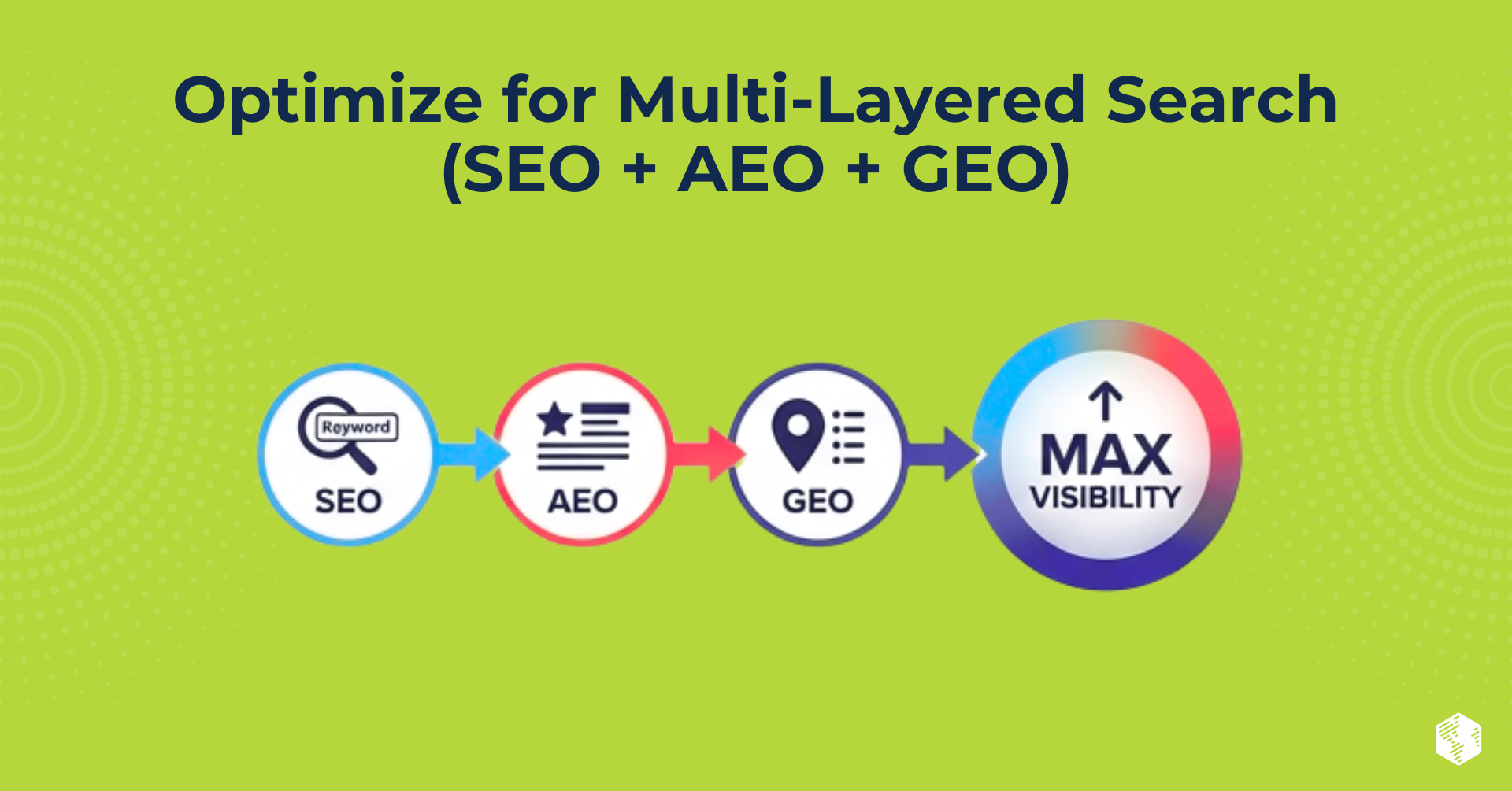
Tip #9: Optimize for Multi-Layered Search (SEO + AEO + GEO)
Search behavior is evolving fast. Engineers still use Google, but they also turn to AI platforms, internal knowledge systems, and specialized industry directories.
In 2026, your search everywhere optimization (SEO) strategy needs to include answer engine optimization (AEO) and generative engine optimization (GEO) as well. Your content must be structured to perform across all these environments, which means clarity, authority, precise terminology, and deep technical detail matter more than ever. Otherwise, your brand won’t be visible where your audience spends time.
By strengthening topical authority and presenting information in a way AI can accurately interpret, you increase your chances of being surfaced in recommendations or summaries as well as in traditional search channels.
The goal is to create visibility at critical early stages of research, long before a buyer reaches out to your team.
Tip #10: Personalize Messaging for Engineers, Operators, & Procurement Teams
Each group involved in manufacturing decisions evaluates your solution from a different lens. Engineers focus on performance factors, operators think about hands on usability, and procurement evaluates cost, longevity, and risk.
Generic messaging doesn’t resonate because it misses the motivations that drive each stakeholder.
When your content and demos speak directly to these perspectives, buyers experience less friction internally. You help each group answer the questions that matter to them, easing the path to consensus and reducing delays in the buying cycle.
Tip #11: Turn Customer & Field Service Data Into Market Intelligence
Your service and support teams observe how your product performs in real world conditions. Their notes often reveal patterns and recurring challenges that can inform both product development and marketing. This first-party data shows you where buyers struggle, what information they search for, and which opportunities exist for improvement.
Transforming these service insights into content, enhancements, or sales messaging allows you to reduce future support needs while creating resources that help prospects understand how your solution performs over time. It strengthens your long-term positioning and deepens customer trust.
Tip #12: Use AI to Bring the Factory Floor to Buyers
New AI-powered tools allow buyers to experience your product in action without stepping inside a facility. Virtual walkthroughs, interactive simulations, and 3D models give prospects a clearer understanding of how your equipment fits into their workflow. These immersive experiences bridge the gap between theory and application.
As buyers interact with the technology, they form a more intuitive understanding of benefits and constraints. Overall, it can lead to more informed conversations and shorter evaluation cycles. It also signals that your company embraces modern tools to make the buying process smoother.
-Dec-15-2025-09-01-25-3543-PM.png?width=1920&height=1005&name=HubSpot%20Content%20Hub%20for%20Marketers%20(5)-Dec-15-2025-09-01-25-3543-PM.png)
Tip #13: Shift From Single Case Studies to Scenario Libraries
Traditional case studies highlight one customer’s success, but manufacturing buyers often want a broader look at how a solution performs across different environments. Scenario libraries provide multiple examples that reflect variations in industry, workflow, environment, or operating conditions to give buyers a richer understanding of potential outcomes.
This format helps prospects identify situations similar to their own, reducing uncertainty about fit. It also highlights the adaptability and range of your solution, which provides stronger support during internal discussions.
Tip #14: Provide Interactive Troubleshooting Guides for Hands-On Teams
When something isn’t performing as expected, buyers and existing customers look for fast, reliable answers. Interactive troubleshooting resources—click-through decision trees, step-by-step visual guides, or searchable issue libraries—give technical teams a way to diagnose and resolve common problems without waiting for support. These tools reduce downtime, minimize uncertainty during high-pressure situations, provide quick help for buyers, and reinforce your commitment to clarity throughout the entire product lifecycle.
Troubleshooting guides also reveal how equipment behaves in real environments. For prospects, these insights demonstrate that your brand anticipates real-world challenges and provides the depth of guidance needed to keep operations running smoothly long after implementation.
Tip #15: Own Your Niche with a Specialized Benchmark Report
A specialized benchmark report gives you a defensible position in the market and creates a resource buyers genuinely rely on. By collecting industry data, operational insights, or performance benchmarks, you produce material that helps prospects understand where they stand and showcases your expertise in a way competitors can’t easily duplicate.
These reports also generate long-lasting momentum. They open doors for conversations at events, strengthen webinars and sales outreach, make your content more likely to appear in AI results, and attract buyers who value insight-driven guidance.
When your organization becomes the source people turn to for perspective, you elevate brand credibility and influence how prospects frame their decisions.
-Dec-15-2025-09-01-25-6732-PM.png?width=1920&height=1005&name=HubSpot%20Content%20Hub%20for%20Marketers%20(6)-Dec-15-2025-09-01-25-6732-PM.png)
How to Prioritize These Strategies in 2026
Navigating new marketing initiatives can feel overwhelming for manufacturers, especially when resources are limited and buyer expectations continue to rise.
The most effective approach is to build in layers, starting with foundational elements that support every stage of the buyer journey, then expanding into credibility-building assets, and finally activating advanced tactics that elevate your presence in competitive markets. This structure keeps your efforts focused and avoids wasting time on sophisticated tactics before the basics are strong enough to support them.
Follow this prioritization model to create a marketing system built for both immediate impact and long-term growth.
Start With a Strong Foundation
Everything begins with clarity. Your website, core messaging, and technical content are the pillars that influence how buyers first understand your solution. When these elements speak directly to operational challenges and communicate value without ambiguity, buyers engage more readily and share your materials internally.
This stage matters because it removes friction early, supports every stakeholder, and creates a consistent narrative that stays with buyers throughout their evaluation.
A strong foundation also helps smaller marketing teams work more efficiently. Instead of reacting to one-off requests, they rely on materials that already answer common questions, reduce back-and-forth, and anchor the brand’s authority. Without this layer, even the most advanced tactics will struggle to gain traction.
Build Credibility & Depth
Once buyers can clearly understand what you offer, the next priority is strengthening trust.
Scenario libraries, detailed case applications, benchmark reports, and transparent proof points help technical audiences assess risk and validate your claims. These materials resonate because they speak in the language of engineers and decision committees: performance, reliability, and real-world outcomes.
Credibility is often the deciding factor in manufacturing deals. When teams can see how your solution performs across conditions and understand how others solved similar challenges, internal alignment becomes easier. It shortens the evaluation cycle and moves your brand into the role of partner rather than vendor.
Layer on Innovative, High-Impact Tactics
Advanced tools like digital twins, AI-driven account prioritization, and immersive simulations deliver exceptional value, but only when paired with strong foundational and credibility layers. These tactics help prospects visualize performance, explore configurations, and gain insights long before formal evaluation begins. They also differentiate you from competitors who still rely on static materials.
This stage should come last because innovation amplifies what already exists. When your messaging is clear and your proof points are strong, advanced experiences become more persuasive. They accelerate the buyer’s journey instead of compensating for missing fundamentals.
B2B Manufacturing Marketing FAQs
What Makes Manufacturing Marketing More Complex Than Other B2B Industries?
Manufacturing involves longer buying cycles, higher technical scrutiny, and multiple stakeholders who each evaluate solutions through different lenses. Buyers need detailed information about performance, compatibility, safety, maintenance, and long-term reliability before they can move forward. Clarity, transparency, and technical depth are essential throughout the marketing process.
How Is AI Changing Marketing for Manufacturers?
AI is reshaping how buyers search for information, compare products, and validate decisions. Engineers now consult AI tools for technical explanations, summaries, and comparisons, which means your content must be structured clearly and comprehensively so it can be interpreted accurately. AI also helps manufacturers identify buying signals earlier, personalize communication, and create more interactive product experiences.
Do Manufacturers Still Need Trade Shows & In-Person Events?
Yes. Trade shows and plant visits remain valuable, but their role has shifted. In-person interactions now serve as high-impact touchpoints within a much longer digital journey. Buyers typically return from events and continue researching online, so the strongest results come from pairing live conversations with a robust digital strategy that reinforces your message after the event.
What Types of Content Do Manufacturing Buyers Find Most Valuable?
Technical buyers gravitate toward resources that help them do their jobs better—application notes, troubleshooting guides, technical videos, spec comparisons, and ROI analyses. They want content that clarifies complexity, reduces risk, and supports the operational realities they face daily. The more practical your resources are, the more they become part of the decision-making workflow.
How Can Manufacturers Stand Out in an AI-Driven Search Environment?
Success comes from building deep topical authority and providing precise, technically rich content. AI tools favor brands that demonstrate expertise, clarity, and consistency. When your digital ecosystem reflects real operational knowledge, you become more visible across search engines, AI assistants, and industry platforms.
When Should a Manufacturer Consider Outsourcing Marketing?
Outsourcing becomes valuable when internal teams don’t have the bandwidth, technical expertise, marketing experience, or digital strategy needed to support growth goals. If marketing is inconsistent, sales lacks strong materials, or the company struggles to create content that resonates with technical buyers, partnering with a specialized team can accelerate progress.
What Should Manufacturers Look for in a Marketing Partner?
Look for a team that understands complex buying cycles, has experience producing technical content, and can connect strategy to measurable outcomes. Your ideal partner should be able to translate engineering knowledge into compelling messaging, strengthen your digital presence across modern search platforms, and build systems that support both short-term opportunities and long-term growth.
Conclusion
The manufacturers poised to win in 2026 are the ones willing to rethink their marketing strategy. When you combine technical depth with modern digital tools, you give engineers, operators, and decision-makers the clarity they need to make a decision.
If you want to put these strategies into practice but don’t have the time, team, budget, or roadmap to execute them, we can help.
At OneIMS, we work alongside manufacturers to build marketing programs that attract high-value buyers, elevate brand authority, and convert technical interest into measurable revenue. Our team blends industry insight with hands-on execution so you can strengthen your digital presence, create content your buyers actually rely on, acquire new customers, and build a pipeline filled with better-qualified opportunities.
Whether you are modernizing your website, producing technical resources, improving lead quality, or navigating the impact of AI on search and buyer behavior, we’re here to partner with you to create a system that supports long-term growth.
Ready to turn these ideas into a strategy that works on the factory floor and in the boardroom? Schedule a consultation today to learn how we can help you move forward.
.png?width=352&name=11%20_middot_%20OneIMS%20Lime%20_middot_%20V9%20layout%20with%20line%20chart%20(1).png)
.png?width=352&name=AEO-SME%20(1).png)